17 September, 2010

Elephants and Humans: A History of Torture, Abuse and Degradation

Mae Ka Pae is the 13th elephant to tread on a landmine on the Thailand/Burma (Myanmar) border. The mine that she trod on has shredded her left foot, and she is currently being cared for by Friends of the Asian Elephant, in the north Thai border.

The label for the pic

Mae Ka Pae is another victim of land mines.


The elephant was thought to have been allowed to cross the border into Burma, in order to find food; it was during this crossing that she stepped on the mine, which would have been left as a result of the conflict between the Myanmar government and ethnic minority rebels.

Friends of the Asian Elephant have experienced vets, who have been providing elephants in similar circumstances with artificial limbs. The first elephant to be fitted with an artificial leg was Mosha, in 2007.

Over the centuries, elephants have always had a subservient relationship with humans, from carrying royalty, used as an old style tank during times of war, being used as a mode of transport over long distances, hunted for their tusks for ivory, during temple festivals and blessing pilgrims and more recently in circuses performing tricks. Current day finds them being used for logging purposes, and, increasingly, as a huge tourist draw, with backpackers and families flocking to Thailand to ride on an elephant.

The label for the pic

An elephant used during war time.


Sadly, the conditions the elephants are raised in for logging, circuses and tourist riding centres, are not shown in the happy tourist/happy elephant photos. Westerners dream of being able to ride an elephant, imagining bonding with these majestic animals. The truth is that in order to ‘tame’ these strong, wild animals, first, their spirit must be broken, this is done via the method of ‘Phajaan,’ where elephants as young as 4 years old are ripped from their mothers and suffer horrific torture until they are deemed to have had their ‘spirit broken.’ They are tied and bound by ropes and chains and contained in a pen where they cannot move, they are held there for days and weeks, usually denied food and water until their mahout has decided they are ready.


Once the elephant is ‘trained’ they are then suitable for unsuspecting tourists to ride upon, feeling they are helping save the elephant, as usually the places they ride the elephants will state they are ‘saving’ the elephants, or are an ‘eco-park.’ Despite their size, carting around up to four people, plus over sized saddle on their back has a detrimental effect on the physical wellbeing of these intelligent animals.

Even after the Phajaan, the torture for the elephant does not stop there, the ‘ankus,’ a short stick with sharp curved hook at the end, is used to control the elephant. The hook is dug into the most sensitive parts of the elephants’ body, such as, behind the ear, on the forehead and trunk area. You just need to get close to an elephant after a show at a zoo to see the nick wounds on their face. Some zoos will try to hide the hook on the end of the stick by placing a brush on the end, but the hook is still there.


The label for the pic

Various ankuses used when training elephants. Source: www.upali.ch


Once an elephant is deemed too old, too unwell to work in the logging industry or the tourist industry, they are no use to the mahouts who have ‘trained’ them. For the lucky ones, in the north of Thailand, they may go to Lek’s elephant rescue, Elephant Nature Park. It is here that elephants can retire in peace, not having to be ridden on again, to ease their aching backs and hopefully heal their psychological wounds. As we know, elephants are social animals, with complex relationships, that have been known to mourn their dead and care for each others’ children. The emotional effects of the treatment they have received throughout their life runs deep.

So, let’s hope that Mae Ka Pae is able to retire now, and that the talented vets at Friends of the Asian elephant can help her to walk free of pain and unhindered, like Mosha.
If you are travelling to South East Asia, do the elephants a favour, and don’t support the elephant ride or mahout training centres, there is a dark secret behind the happy tourist photos. Once the demand stops, the supply will stop.

15 September, 2010

Fur the Sake of a Coat.

As Sweden looks to vote on whether to have an outright ban on fur farms, previously fox farms were banned, fur has hit the catwalks again ready for the autumn/fall season. Celebrities who have been off the radar recently have been seen to be endorsing the skin of farmed animals. Who knows what has possessed them to make this decision, let’s hope it isn’t just to make the headlines in order to revive their careers. Brooke Shields and Janet Jackson, to name but a few, have been seen not just wearing, but advertising fur.

Animals farmed for fur are kept in tiny cages, similar to those in puppy mills, which for solitary animals, such as mink, this can be psychologically damaging, leading to stereotypical behaviour such as self-mutilation (biting off one’s own paws and limbs).

We know how the animals are drowned, gassed or electrocuted to death, you can’t slit the animal’s throat, gash wounds do not look too good on a wolf skin coat. If you haven’t seen the footage, you can watch the trailer for the latest documentary, Skin Trade, which highlights the gruesome methods used.

However, the age old fur trade it hitting back, ‘fur is green’ is the new slogan often used to justify butchering animals for luxury fashion items. The Fur Council of Canada implies that without the fur industry’s trapping of wild animals for fur there would be a population boom and ‘Nature’ would not be able to support the surplus animals and even rabies would be rife. Tell that to the beavers in the UK.

As for the welfare of farmed animals, the Council says that ”the optimal standards for the nutrition, housing, husbandry and euthanasia of farmed-raised mink and fox are set out in Recommended Codes of Practice developed by Agriculture Canada,” this is not a law, and is only a guideline. The Council goes on to state that, “there is a strong incentive to respect these codes because there is no other way to produce high quality fur; farmers who do not care for their animals will not remain in business very long.”

With all due respect to the Council, I highly doubt that Janet Jackson and Kanye West visited the intensively farmed animals and hand-picked which ones would be killed for their coat.

“Fur has become the texture of the moment.” Fur is not a texture. It is the skin of an animal that has been ripped from its body while it was still warm and often still alive. Fur was worn in the Stone Ages because it was the only source of warmth available. Today, there are plenty of ecological friendly materials that can be worn. Fur is tacky, and trashy. Even if it is ‘looked after’ it will smell eventually.


The label for the pic


The label for the pic

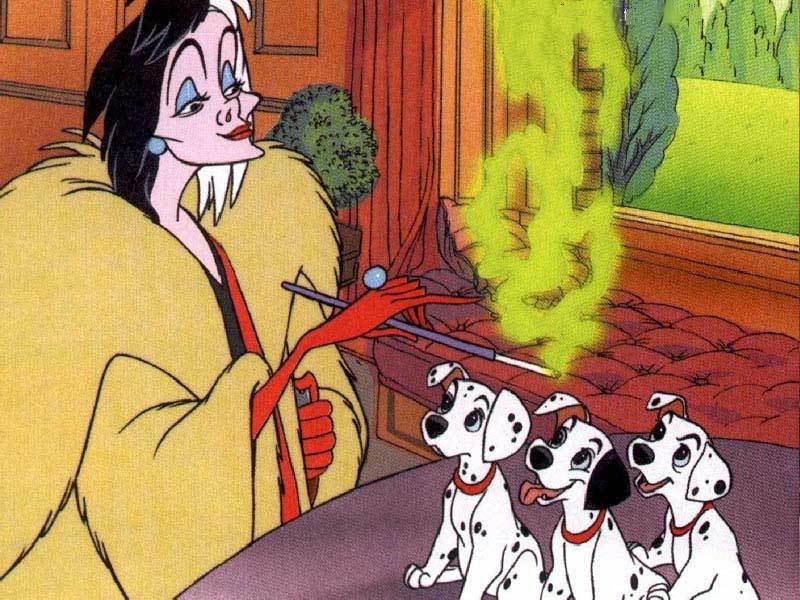
Brooke Shields and Cruella de Ville: Two women who like to wear fur. Any resemblance is purely coincidental


Like shark’s fin soup, once a symbol of wealth, it is so readily available, mass produced so cheaply, anyone can afford it. You just have to come across to Asia to see how cheap both products can be produced.


The label for the pic

Source: PETA files. Fur Free and fabulous!


These women have denounced fur, and their careers are still going strong, Brooke.

02 September, 2010

At What Cost Conservation? Polar Bears in Tropical Zoos.

Polar bears, think of polar bears and no doubt snow will spring to mind, wide vast land with snow, or at least, during the warmer months, grass. You don’t expect to see concrete floors and cramped enclosures. Sadly, for many polar bears in zoos, this is the case.

There are polar bears in zoos all over the world. In the UK, the last polar bear,Mercedes, was moved to a larger enclosure to live out the rest of her years in a slightly colder climate.

Meanwhile, over in Asia, the Singapore Zoo has been making the news. The polar bear enclosure has attracted criticism from local animal welfare charity, ACRES (Animal Concerns Research and Education Society). ACRES has been monitoring the polar bears plight since 2005, where they discovered that in the Singapore heat, of up to 32 degrees C, the bears have been showing signs of heat stress and the stereotypical behaviours observed in zoo animals that do not have enough space.


The label for the pic

Singapore Zoo Bears. Source: www.acres.org.sg


In recent news, the Singapore Zoo has declared it will be making changes to the bear’s enclosure. They will be making the new enclosure 3.5 times bigger than the current one, it will be 1,400 sq m, considering a solitary bear’s home range can be a few hundred miles, the enclosure will fall short again. Not even considering that the mother and son relationship is completely unnatural, Inuka, the 18 year old male should have left home a long time ago.

The new enclosure will have soil so that the bears no longer will have to walk and rest on hard concrete, ideally it will be deep enough for them to dig down and make beds and dens.

At what cost will this enclosure be to the climate? Polar bears are arctic animals; even running in the freezing cold can cause them to overheat. So, in order to maintain an ideal temperature the zoo is making the new enclosure climate controlled. Imagine the financial and environmental cost to keep this running. Sure, the polar bears at the zoo may be cold, but what about their wild arctic cousins? Their ice caps are going to be melting, just to keep the two Singapore Zoo bears cool! Surely, it is better just to put the two bears on a plane and transport them to pastures cold?

The IUCN red list classifies polar bears as Vulnerable, listing the main threat to them as climate change, so while it is important to ensure that polar bears do not disappear completely, keeping them in an enclosure that contributes to climate change is irresponsible.

Animal Abuse in the Media

The recent video of a young woman throwing week old puppies into a river, has horrified all who have watched it.

Hopefully the video is a fake (like the recent fox killings), but watching the squirming and yelping puppies in her hands before she throws them into the river appears to be the Real McCoy.

Sadly, drowning puppies and kittens in rivers has been a method of ‘population control’ for years, especially on farms. In fact, poet Seamus Heaney even wrote an entire poem about growing up where drowning kittens was common place.

The reason for the outcry? The media. With the internet now accessible to almost everyone, videos and pictures depicting animal cruelty are available everywhere.
Recently, a facebook group which tortured and murdered animals and then posted the videos on the group was removed. On the internet, you can find crush videos (videos showing young women in stilettos squashing animals with their feet), animals being tortured and videos depicting animals being hunted. An American court has even placed protection on these videos, as they come under the First Amendment, namely, the freedom of speech.

However, the coverage of these videos means it has been possible in some cases to identify the person in the video. In the case of the woman who bizarrely dumped a cat in a wheelie bin outside a home, only because the cats’ owners placed the video on the internet were people able to identify her. The police and RSPCA are now looking at prosecuting Mary Bale.

Hopefully, with the wide coverage of the puppy deaths, someone out there will be able to identify her, and hopefully the country she resides in, has strong animal welfare laws. What is most horrifying about this video; is the sheer pleasure she seems to take in throwing the defenceless pups into the water.

Whilst publishing this post, a sanctuary goat was brutally mutilated; hopefully the internet sleuths can focus on finding out who tortured this poor animal, who had to be euthanized because of his extensive injuries.

27 August, 2010

Trade in Endangered Animals Still Rife in South East Asia

More news from TRAFFIC; a live tiger cub was found concealed in a woman’s luggage at Bangkok’s Suvarnabhumi International Airport on Sunday. The tiger was sedated and hidden amongst stuffed toy tigers.

Airport staff suspicions were aroused when the bag went through the sensors and the x-ray showed an image of a cat’s beating heart and other organs. Tests of the tiger DNA are currently being conducted to determine the tiger’s origin and sub species, which will determine whether it was wild caught, or captive born.

Tiger Cub Found at Bangkok's Airport, Sulma Warne-TRAFFIC

Tiger Cub Found at Bangkok's Airport, Sulma Warne-TRAFFIC


While over in Vietnam, a massive seizure of wildlife from restaurants was conducted by the Lam Dong Forest Protection Department (FPD). A huge co-ordinated campaign involving over 100 officers from the province investigated restaurants suspected of selling illegal wildlife based on results from a survey that found that 44 restaurants and 33 Traditional Chinese Medicines (TCM) shops (representing 68% restaurants and 21% TCM shop visited) were serving wildlife.

Civets Found During the Raid. ZooNews Digest

Civets Found During the Raid. ZooNews Digest


A huge number of animals and animal parts were found, over 300kg of meat from animals including civets, pangolins, porcupine, mouse deer, bear paws, clouded leopard, short-clawed otter, leopard cat, binturong, and small Indian civet. These animals were destined to end up on the plates of customers at the restaurants.

Langurs and Other Animals Seized. ZooNews Digest

Langurs and Other Animals Seized. ZooNews Digest


The two findings this week indicate that the illegal wildlife trade is still going strong in South East Asia, and with the tiger heading for Iran, the trade is not just staying in South East Asia. Although it is fantastic that the raids occurred, and the staff at the airport were quick witted enough to spot the tiger amongst the toys, it shows that people will still try to smuggle animals, dead or alive, and will continue to poach them unless something is done to really act as a preventative.

26 August, 2010

Ugly to Some, but Endangered to All.

Angelina Jolie wants you to save the Stellate Sturgeon.

Not likely, mainly because the Stellate sturgeon is not a beautiful fish. Rather the opposite, in fact. Of course, beauty is in the eye of the beholder, but in a cute competition with, say, a panda, the Stellate sturgeon would be happy to go home with the wooden spoon.

Flagship species such as; the cute and cuddly panda bear, the majestic Asian elephant and beautiful tiger, are visibly attractive, and of course excellent fundraisers for conservation and animal welfare charities. And why not? After all, these organisations cover all aspects of conservation and animal welfare.

But, as the underdogs, it is important that the species, that are not so beautiful, except maybe to their mothers, get a chance to shine.

Here are 5 of the not so attractive, but still endangered, animals on the

ICUN red list:

1: Purple Burrowing frog (Nasikabatrachus sahyadrensis)

Things are not looking too bright for this frog, only 135 specimens have been found, and only three of these have been female, no wonder then, that the numbers are thought to be declining. Also not helping the frogs chance of survival, is its behaviour of living 1.3 – 2.7m underground and only emerging for a few weeks a year to breed. Found only in two places in Western Ghats in India, deforestation is the main threat facing this animal.


Purple Burrowing Frog (Source: Wiki)


2: Gharial, or Gavial (Gavialis gangeticus)

This critically endangered reptile’s home is being destroyed, and the females are nesting less and less each year. When the females do nest, their eggs are sometimes eaten by tribal people, who consider the eggs a delicacy. Most conservation efforts have not been successful, and this has resulted in the number of males thought to be in the wild estimated at less than 20.


Gharial (Source: Wiki)


3: Squat-headed Hammerhead Shark (Sphyrna mokarran)

No prizes for guessing what trade has caused this shark to be on the endangered list. Longline catches and the shark’s large fins make them a target for the Asian fin trade. Sharks have a very low reproduction rate, with this shark producing only one pup every two years the numbers are not looking good.


4: Stellate Sturgeon (Acipenser stellatus)

Over fishing is the cause of this sturgeon’s population decrease, pollution also tipping the scales. Another fish with low population rates, the females only mate every 3-4 years and the males every 2-3 years. If the over fishing continues, it won’t be long before this bizarre little fish disappears.


Stellate Sturgeon(Source: www.sturgeon-web.co.uk)


5: Rabb’s Fringe-limbed Treefrog (Ecnomiohyla rabborum)

This tree frog is yet another victim of chytridiomycosis, caused by a fungal growth in South America. This fungus is thought to have wiped out over 80% of the population. Since the fungus was discovered to be killing frogs in 2006, calls from male frogs have decreased. The forests are becoming devoid of the calls and breeding efforts have so far not been successful.

Rabb's Fringe-limbed Treefrog (Source: http://amphibiaweb.org, 2009 Brad Wilson)

24 August, 2010

Should Nellie Pack Her Trunk, and Say Goodbye to the Zoo?

Zoos Forum: Review of elephant husbandry in UK zoos

The RSPCA has called for an outright ban on elephants in zoos, following a report of the welfare conditions of these highly intelligent animals.

The report, from Bristol University, was reviewed by Zoo Forum, an independent body set up by the Department for Environment, Food and Rural Affairs (Defra). It found that there are serious welfare problems in UK zoos with regards to the wellbeing of the elephants.

Elephants are wide ranging, travelling between a few kilometres to up to 12 a day. They are highly social animals, living in family groups of up to 15 related females, plus calves. Providing adequate living conditions for captive elephants is a challenge for any zoo, and would involve a large living space with a complex enrichment program, plus areas of seclusion. The enclosure would ideally, accurately represent a wild environment.

When the review was written, there were around 70 elephants in British zoos, with roughly equal numbers of Asian (Elephas maximus) and African (Loxodonta africana). This report can serve as a representation of all elephants in zoos, all across the world.

The original report does not say that the zoos are not trying to improve their elephants welfare, indeed they report that ‘Zoos are acutely aware of the issues surrounding the welfare of their elephants, and attempts to enrich and improve their lives are ongoing.’ Harris et al 2008.


It has previously been documented that the larger the enclosure an animal lives in, the less likely stereotypical behaviour will occur, this report goes on to state that ‘It would not be possible to provide space equivalent to home ranges in the wild.’

While acknowledging lameness in elephants being a serious problem, the report compares the level of lameness in zoos as being on par with lameness with dairy cattle, broiler chickens and factory farmed pigs. This is a damning comparison, but the report seems to defend the level of lameness, saying that is it not a problem of elephants only. Just because it affects more than one species, doesn’t make it right.

The elephant mortality rates in zoos was shocking, both Asian and African elephants in zoos suffered from decreased mortality compared to wild populations and those working in Burmese logging camps. The still birth and infant mortality rates were also shockingly high. One possible reason for this was the behaviour of mothers killing their young, a trait absent in wild elephants.

Zoos are keeping elephants in zoos for conservation, to attract visitors and create fundraising opportunities, to educate the public, to educate keepers on husbandry and elephant medicine and to provide research for conservation efforts.

But if the elephants are suffering, as this report implies, then at what cost is conservation? African elephants are being culled for their effects on farmland in Africa, and there are calls to keep Asian elephants in Asia. Why do elephants need to be kept in the UK, so far away from their homeland?

Why not instead focus on maintaining a wild population, creating a land space in home countries of the elephants, or helping those elephants who are trapped in the tourist industry, those zoos that have phased out the keeping of elephants are still doing well. Zoos, who house elephants today, should follow their example, and work towards making the suffering population of elephants extinct in UK zoos.

Other countries should look at themselves in the same critical light, and take a step forward, as the UK has done, to improve the lives of their elephants that reside within their zoos.